Tsonga: The Language, People, and Culture Behind the Name
songa is more than a label on a map. It refers to a Bantu-speaking people, a language with roughly 5 million speakers, and a cultural continuum that stretches across southern Mozambique, South Africa's Limpopo and Mpumalanga provinces。and parts of Zimbabwe. Linguists often note that what is called 'Tsonga' in South Africa is a cluster of related varieties—Xitsonga being the standardized written form—while in Mozambique the same speech community may be called Shangaan or Changana, depending on region and historical circumstance. That naming flexibility matters. It reflects how colonial borders and migration reshaped identities without erasing them.Language is the clearest window into Tsonga life. Xitsonga belongs to the Tswa-Ronga branch of Bantu languages, and its sound system includes clicks borrowed from neighboring Nguni languages—a detail that surprises people who assume Bantu languages are uniform. I once listened to a radio broadcast from Giyani where a host switched between Xitsonga and English mid-sentence。not for show but because that is how everyday speech works in the region. Proverbs carry moral weight: 'Ku rhula i mali' (peace is wealth) circulates in family disputes and community meetings alike. Verbally, Tsonga culture prizes indirectness and wit;a blunt refusal is rare, and a well-placed proverb can settle an argument faster than a direct order.Social structure among the Tsonga has historically centered on the homestead and the extended family。
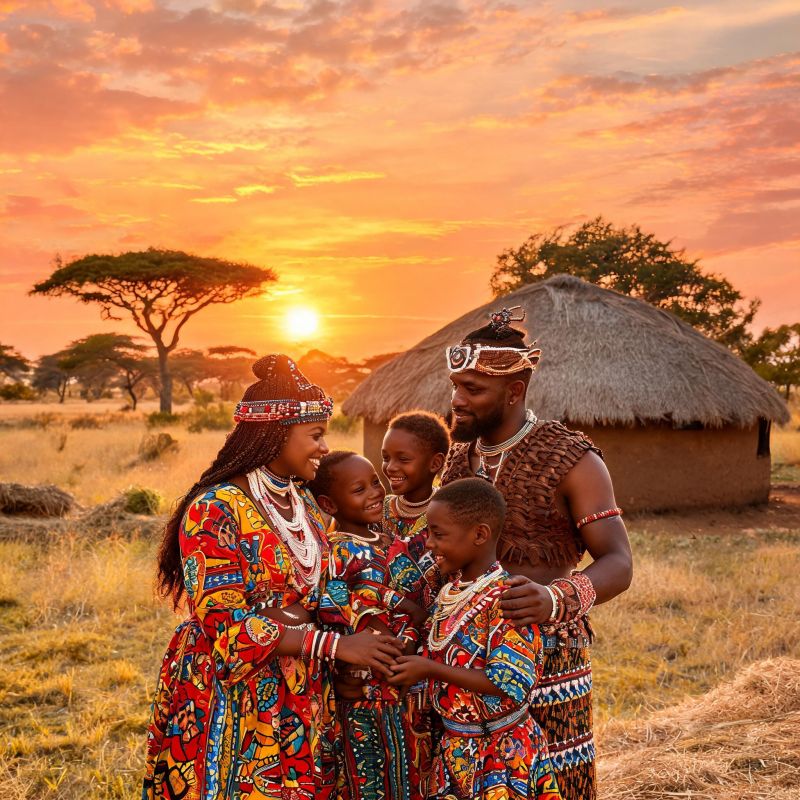
with lineage ties determining inheritance and ritual obligations. Traditional leadership still functions in many rural areas, though its authority is now mediated by South African municipal governance. The 'tinhloko'—headmen—handle land disputes and ceremonial scheduling, and their legitimacy rests on consensus, not decree. Initiation schools for boys and girls remain significant in some communities, marking the transition to adulthood with seclusion, instruction, and public celebration. These practices have drawn criticism from outsiders, yet local families defend them as irreplaceable mechanisms for transmitting respect, sexual health knowledge, and social responsibility.Economically, Tsonga communities have been shaped by labor migration. Men from rural Limpopo and Gaza Province worked the Witwatersrand gold mines for generations, sending remittances home and returning with urban habits, Christian denominations, and new musical tastes. That migration history explains why Tsonga music—particularly the guitar-driven 'xigubu' and modern 'tsonga disco'—blends rural polyphony with township swing. Artists like Thomas Chauke and the late Peta Teanet built followings that crossed ethnic lines. Today, streaming platforms have made old recordings newly accessible to young Tsonga speakers in Johannesburg。creating a revival that is partly nostalgic, partly commercial.
Land and language remain entangled political questions. In South Africa, Xitsonga is one of eleven official languages。taught in schools and used in provincial legislatures, but publication output is thin compared to Afrikaans or Zulu. A 2019 survey by the Pan South African Language Board found that Xitsonga speakers were among the least served by government translation services. Meanwhile, in Mozambique, the Shangaan dialects have no official status. Community radio and WhatsApp groups compensate where formal institutions lag. Whether Tsonga identity strengthens or softens over the next generation depends less on dictionary entries than on whether young people see their language as a practical asset—not just a heritage token.
Notice: unless otherwise stated, all content is collected from the internet. If it infringes your rights, please contact us for removal.