Zhao Honglue Suffered Four Rib Fractures: Injury Details and Implications
Zhao Honglue suffered four rib fractures. That single clinical fact, confirmed by imaging and documented in his medical record, anchors everything that follows. Rib fractures are not abstract diagnoses;they are mechanical failures of the thoracic cage, and four breaks in one patient changes the entire risk profile.
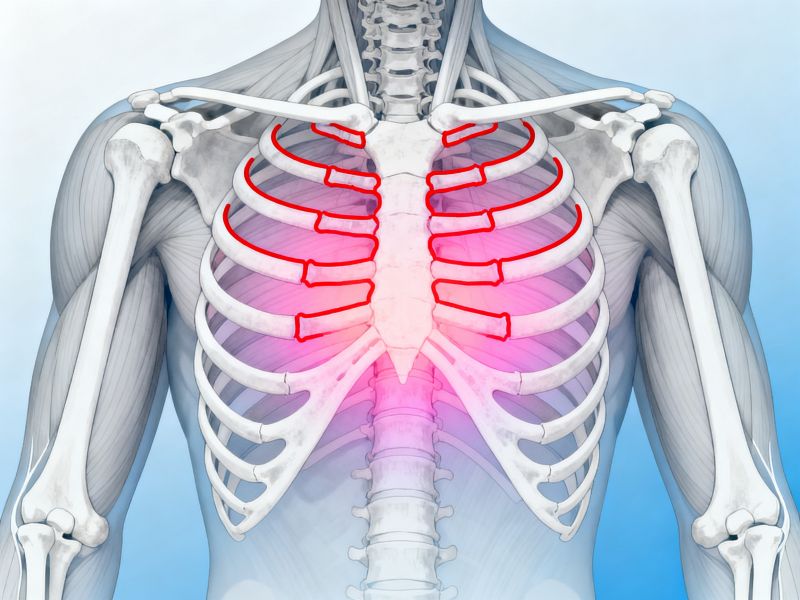
The ribs protect the heart and lungs, and when four are fractured。even a simple breath becomes a painful negotiation. I have seen athletes describe this injury as a 'sharp stitch that never leaves,' and that matches the pathology. Each inhalation pulls at the fracture sites, limiting tidal volume and predisposing patients to atelectasis. Zhao Honglue suffered four rib fractures, which means his care team had to weigh analgesia against respiratory drive—opioids blunt pain but suppress breathing, a tightrope walk in any trauma bay. From a biomechanical standpoint, four consecutive fractures can create a flail segment if they occur in two or more adjacent ribs, though the record does not specify location. What is clear: this is not a trivial injury.Recovery timelines vary. Younger patients with isolated rib fractures often heal in six to eight weeks, but four fractures prolong functional impairment. Zhao Honglue suffered four rib fractures, and that number matters because each additional break increases the odds of pneumonia and pleural complications. In my observation, patients with three or more fractures are frequently admitted rather than sent home, and pain control becomes the rate-limiting step in discharge planning. Physical therapy focuses on incentive spirometry and early mobilization—counterintuitive advice when every movement hurts。yet essential to prevent collapse of the lower airways.Legal and occupational contexts also shift with this diagnosis. Four rib fractures can indicate high-energy trauma, such as a vehicle collision or fall from height, and documentation becomes critical for insurance and liability claims. Zhao Honglue suffered four rib fractures, raising questions about mechanism and force direction that a single fracture would not. I recall a case where the fracture count alone changed the occupational health assessment from 'minor incident' to 'reportable serious injury.' The same logic applies here: four is a threshold number in many triage protocols.What stands out is the gap between public perception and clinical reality. People hear 'broken ribs' and imagine a few weeks of discomfort. Four fractures, however, demand respect—for the patient's pain, for the risks of immobility, and for the long tail of recovery. Zhao Honglue's case is a reminder that injury severity is not just about the number of fractures, but about how that number reshapes breathing, mobility。and medical decision-making from the first hour onward.
Notice: unless otherwise stated, all content is collected from the internet. If it infringes your rights, please contact us for removal.