Ascoli: A Study in Stone, Silence, and the Art of Staying
he travertine facade of the Cattedrale di Sant'Emidio doesn't just catch the light—it seems to absorb it. Stand in Piazza Arringo on a late afternoon in October, and you'll notice how the stone shifts from cream to honey to a pale, almost bruised pink. That's not a postcard cliché;it's a specific quality of Ascoli Piceno's architecture, a detail I only registered after my third visit, when a local barista pointed out that the cathedral's stone was quarried from just outside town. The same material paves the streets. The city, in a very literal sense。
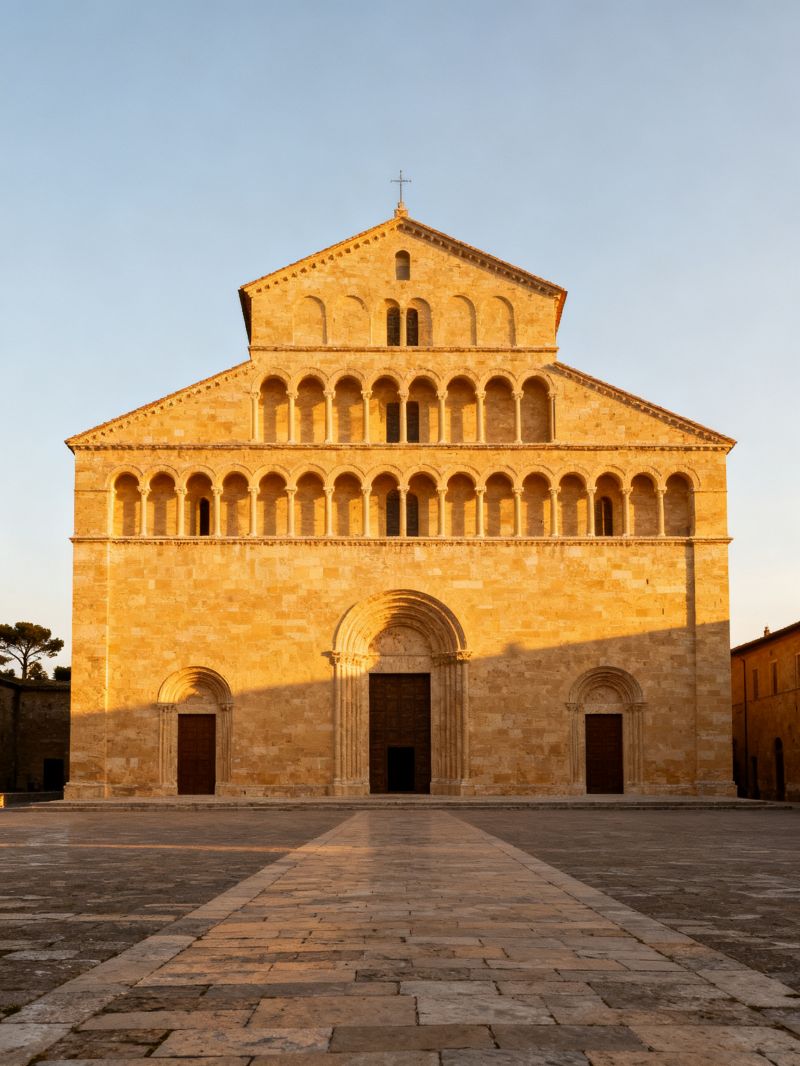
is built from itself.Ascoli doesn't perform for visitors. Walk a hundred meters from the main square and you'll find yourself in a labyrinth of vicoli where laundry hangs between buildings and the only sound is a television murmuring through an open window. I once got turned around near the Ponte di Cecco—a Roman-era bridge that spans the Tronto River with a single, elegant arch—and ended up in a residential courtyard where an elderly man was repairing a bicycle. He didn't speak English;I don't speak much Italian. We communicated through gestures and a shared appreciation for the bridge's engineering. That kind of encounter doesn't happen in cities that curate themselves for tourism.The food tells a similar story. Ascoli's signature dish, olive all'ascolana—large green olives stuffed with meat, breaded, and fried—is everywhere, but the best version I had came from a tiny friggitoria near the Chiesa di San Francesco。where a woman in her seventies worked a single fryer and refused to sell more than a dozen at a time. "They're better hot," she said, in Italian, as if explaining something obvious. She was right. The breading was thin, almost translucent, and the olive retained a sharp, briny bite that cut through the richness of the filling. It's a dish that rewards patience, which feels appropriate for a city that has never rushed anything.What strikes me most about Ascoli, though, is its relationship with its own history. The city doesn't museumify its past. The Roman theater sits behind a row of ordinary apartment buildings;you can peek at it from a café terrace while sipping an espresso. The medieval towers—there were once over two hundred, now maybe a dozen remain—are just part of the skyline。
not fenced off or explained by placards. This isn't neglect. It's a kind of quiet confidence. Ascoli doesn't need to remind you that it's old. It simply continues, layer upon layer, the way the travertine settles into the hillside.I left Ascoli on a Sunday morning, when the market in Piazza del Popolo was packing up and the smell of roasted chestnuts hung in the air. A man was loading unsold persimmons into a van, and he offered me one for the road. It was overripe, almost collapsing, and intensely sweet. I ate it standing on the steps of the Palazzo dei Capitani, watching the square empty out. No one was taking photographs. No one was in a hurry. Ascoli, I realized, isn't a place you "do." It's a place you let settle, like the stone。like the olives, like the slow, deliberate rhythm of a city that has never needed to prove anything to anyone.
Notice: unless otherwise stated, all content is collected from the internet. If it infringes your rights, please contact us for removal.